
Not necessarily. Although control panels and internal components can fail, the interlock may be responding to a problem elsewhere within the kitchen. Replacing the controller without checking the extraction fan, airflow switches, gas solenoid, electrical supply and ductwork could leave the original fault unresolved. A thorough inspection should establish which component or operating condition is preventing the system from enabling the gas supply. Canary Gas takes an engineering-led approach to fault finding and will explain whether the issue can be repaired, whether a component requires replacement or whether improvements to the ventilation system are necessary.
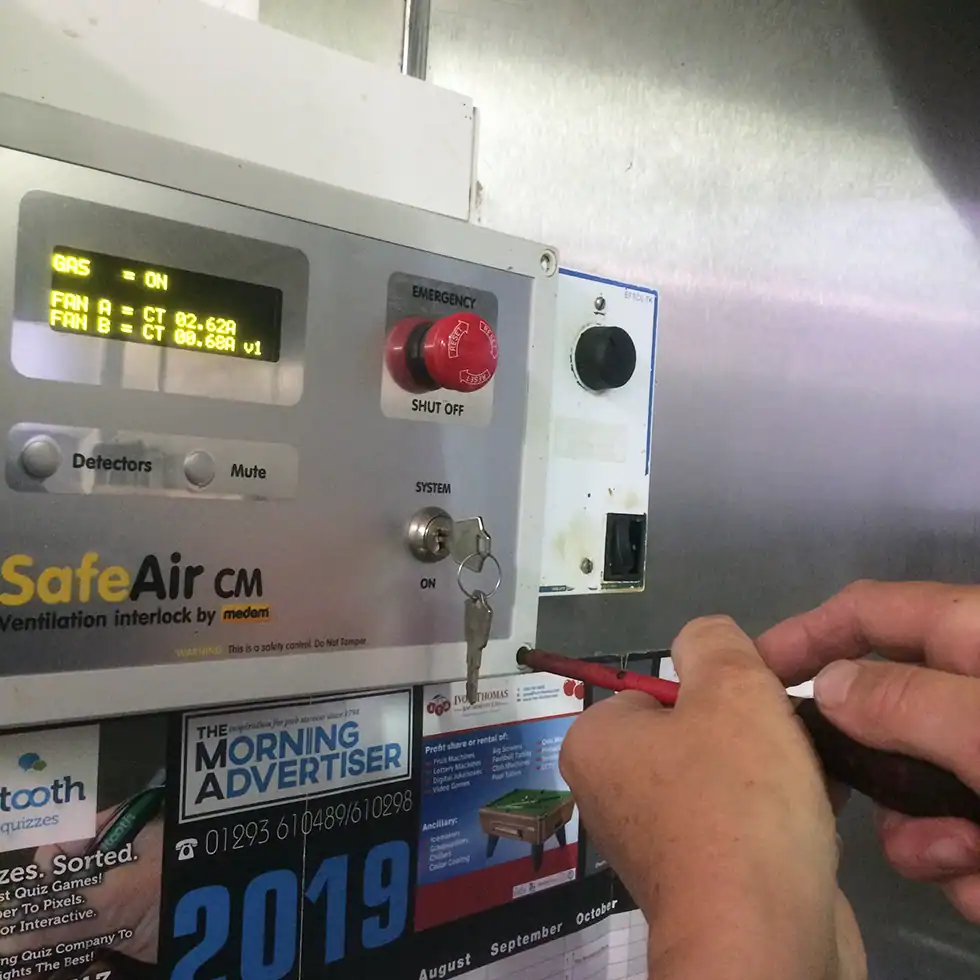
Gas Interlock Faults in Liverpool
Canary Gas diagnoses and repairs gas interlock faults in Liverpool for restaurants, takeaways, pubs, hotels, cafés and other commercial catering premises. If your kitchen gas supply will not activate, repeatedly shuts down or displays an interlock warning, our experienced commercial engineers can inspect the connected gas, ventilation and control components to identify the underlying fault.
Get A Free Quote
Commercial Kitchen Gas Interlock Fault Diagnosis
A gas interlock fault can prevent every connected gas appliance in a commercial kitchen from operating. While this interruption can be frustrating during a busy service, the system may be responding to a genuine problem with the extraction system, airflow or gas controls. The fault should therefore be investigated properly rather than repeatedly reset or bypassed.
Canary Gas Ltd provides professional gas interlock fault finding throughout Liverpool. Our engineers assess the complete safety arrangement, which may include the control panel, gas solenoid valve, airflow or pressure switches, fan controls, electrical connections and associated ventilation system.
We look beyond the warning shown on the controller to determine why the system has entered a fault condition. This is important because replacing a control component will not resolve the problem if the true cause is restricted extraction, a damaged fan, blocked filters or insufficient airflow.
Once the issue has been identified, we will explain the findings and recommend the work required to restore safe operation. Where connected gas equipment or pipework also needs attention, our commercial gas engineers in Liverpool can provide coordinated support.

How a Gas Interlock System Protects Your Kitchen
A gas safety interlock connects the commercial kitchen’s gas supply to its mechanical ventilation system. The arrangement is intended to prevent gas-fired catering appliances from operating unless the required extraction conditions have been established.
If the system cannot confirm suitable airflow, or if the extraction system fails while the kitchen is operating, the interlock should isolate the gas supply. This helps reduce the risk created by inadequate ventilation, including the accumulation of heat, fumes and combustion products.
The Health and Safety Executive’s guidance on catering kitchen ventilation explains the importance of effective ventilation and the duties placed on employers, building managers, designers and equipment installers. The design and condition of the gas installation, appliances and ventilation system must be considered together.
An interlock shutdown should never be treated as an inconvenience to be overridden. It is an indication that the system cannot confirm the conditions required for safe gas operation. Canary Gas can inspect the fault and establish whether the problem sits within the gas controls, ventilation system or the connection between them.

Common Gas Interlock Problems We Investigate
Interlock faults can develop for several reasons, and the message displayed by the control panel does not always identify the root cause. A professional inspection may reveal a faulty airflow switch, pressure sensor, solenoid valve, fan proving device, controller or electrical connection.
The interlock may also be functioning correctly but responding to a problem elsewhere in the kitchen. Grease-loaded filters, restricted ductwork, a damaged fan, an incorrect fan setting or insufficient replacement air can all affect extraction performance. Our forthcoming commercial kitchen extraction engineer in Liverpool page will provide further information about support for associated extraction faults.
Other problems can appear after catering equipment, ventilation components or kitchen layouts have been altered. New appliances may place different demands on the gas or extraction system, while control components can be disturbed during refurbishment work. If you are planning changes to your kitchen, professional commercial catering equipment installation can help ensure the appliances and supporting systems are considered together.
Why Choose Canary Gas for Interlock Repairs?
Canary Gas has more than 30 years of experience across commercial gas engineering, catering equipment, kitchen installation, ventilation and bespoke fabrication. This broad technical knowledge allows us to investigate the complete system rather than examining the gas interlock controller in isolation.
Our engineers understand how interlock systems interact with extraction fans, airflow proving devices, gas valves, appliances and kitchen operating conditions. We provide clear findings and carefully considered recommendations, helping Liverpool businesses address faults safely and reduce unnecessary disruption.
Gas-related work is completed by engineers holding the appropriate commercial Gas Safe qualifications. We will not advise clients to bypass safety controls or continue operating gas equipment where safe conditions cannot be confirmed.
Engineering-Led Fault Finding
We investigate the full system to identify the underlying cause of interlock failures.
Commercial Gas Experience
Our engineers understand the gas controls and appliances used in professional catering environments.
Ventilation Knowledge
We can assess how extraction performance and airflow affect the gas safety interlock.
Clear Recommendations
Businesses receive straightforward explanations of identified faults and the work required.
Gas Interlock Support Across Liverpool and Merseyside
We investigate commercial kitchen gas interlock faults throughout Liverpool City Centre, the Baltic Triangle, Ropewalks, the waterfront, Aigburth, Allerton, Woolton, Toxteth, Anfield, Walton and surrounding areas.
Our clients include restaurants, takeaways, pubs, cafés, hotels, schools, care facilities, event venues and other organisations operating commercial kitchens. We understand that an interlock shutdown can prevent an entire cooking line from being used, so we work carefully to establish the cause and explain the safest route towards restoring operation.
Canary Gas also supports businesses across Merseyside, including St Helens, Southport and the Wirral, as well as suitable commercial projects throughout the North West. Interlock fault finding can be coordinated with a wider commercial gas safety inspection where the condition of the complete installation needs to be assessed.
Contact Canary Gas today to arrange an inspection of a faulty commercial kitchen gas interlock in Liverpool.
Frequently Asked Questions
A gas interlock may show a fault when it cannot confirm that the mechanical extraction system is operating correctly. Possible causes include insufficient airflow, blocked filters, a damaged fan, a faulty airflow or pressure switch, electrical problems, control panel defects or an issue with the gas solenoid valve. The interlock itself may be working correctly by preventing the gas supply from opening under potentially unsafe conditions. The controller should not be repeatedly reset without investigating why the fault has appeared. Canary Gas can inspect the connected controls, ventilation and gas components to identify the underlying problem and recommend appropriate repairs.
No. A gas interlock is an important safety control and should not be bypassed to keep a kitchen operating. A manual bypass could allow gas-fired appliances to operate without effective mechanical ventilation, exposing staff and others to combustion products and other risks. HSE catering guidance states that manual bypasses to interlock systems are not permitted. Staff should turn off affected equipment, follow the site’s safety procedures and arrange an inspection by an appropriately qualified commercial engineer. Canary Gas can determine whether the interlock has developed a component fault or is responding correctly to inadequate extraction or another unsafe condition.
A running fan does not necessarily mean that the extraction system is achieving sufficient airflow. The interlock may use a pressure switch, airflow sensor or other proving arrangement to confirm that the system is performing as required. Grease-loaded filters, blocked ductwork, a damaged fan impeller, incorrect fan speed or insufficient replacement air may prevent the system from proving airflow even though the fan motor can be heard. Alternatively, the issue may involve the proving switch, controller, wiring or gas valve. Our engineers can assess the ventilation and gas controls together to determine why the gas supply remains isolated.