
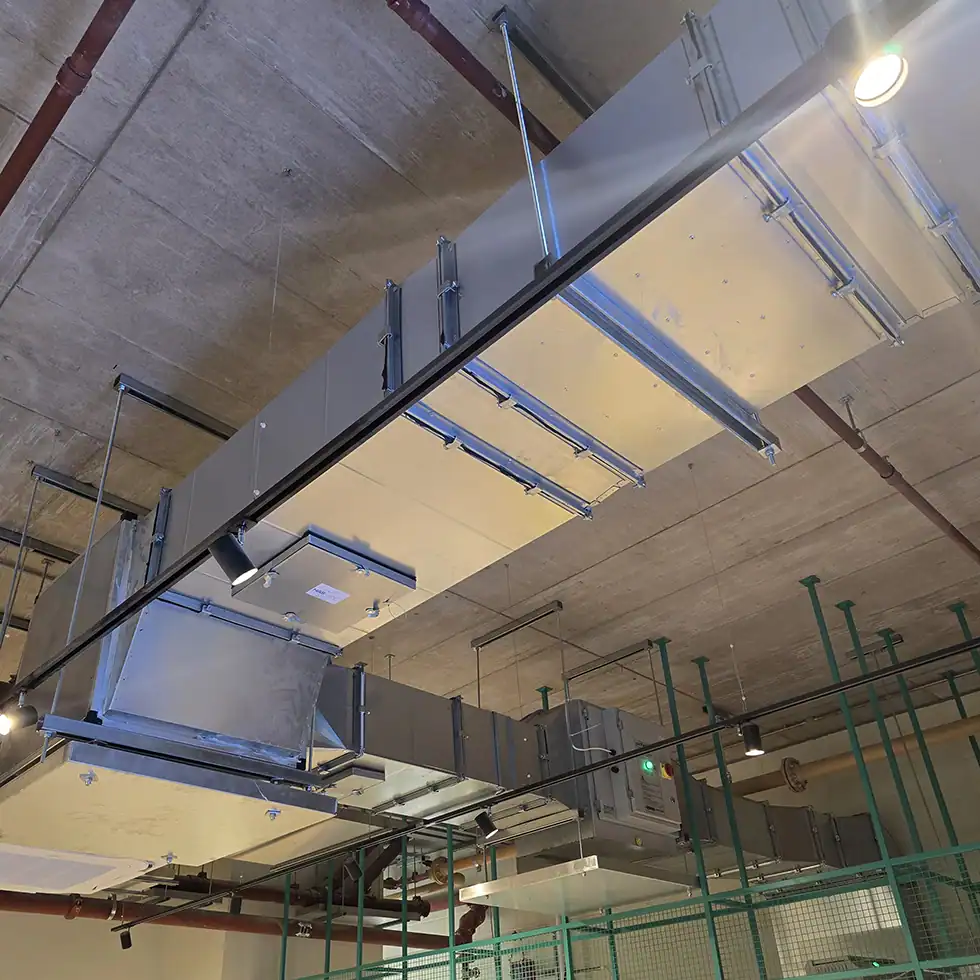
A commercial kitchen can generate large quantities of heat, steam, smoke, grease and cooking odours in a relatively small area. Without effective extraction ventilation, these contaminants can remain within the kitchen, spread into customer areas or be discharged in a way that affects neighbouring properties.
For restaurants, takeaways, hotels, cafés, pubs and institutional kitchens across Liverpool, extraction is an essential part of the premises rather than an optional accessory. The system must be designed around the cooking equipment, operating hours, building layout and surrounding environment.
Canary Gas designs, manufactures and installs commercial kitchen extraction ventilation in Liverpool, providing engineered systems tailored to each site. From the canopy and ductwork to fans, controls, replacement air and odour treatment, every element must work together to support safe, efficient kitchen operation.
Why Commercial Kitchens Need Effective Extraction
Cooking processes release more than visible steam. Depending on the appliances and menu, the air may contain heat, moisture, grease particles, smoke, vapours and combustion products. If these are not captured effectively, working conditions can quickly become uncomfortable.
Excess heat places additional strain on kitchen staff, while condensation can affect surfaces, finishes and electrical components. Airborne grease may settle throughout the kitchen and increase cleaning demands. Smoke and strong odours can travel into dining areas, shared corridors or neighbouring premises.
The Health and Safety Executive’s guidance on kitchen ventilation explains that kitchens require adequate ventilation to create a safe and comfortable working environment. It states that cooking fumes and heat normally need to be removed through mechanical extraction and discharged to a safe external location.
A well-designed extraction system captures contaminants close to the cooking source, moves them through suitable ductwork and discharges the extracted air appropriately.
How a Kitchen Extraction System Works
A commercial extraction system is made up of several connected elements. The visible canopy sits above or around the cooking equipment and captures rising heat and contaminants. Filters help control grease before the air enters the ductwork, while the fan creates the airflow needed to move extracted air through the system.
Ductwork carries the air towards the chosen discharge point. Depending on the location and sensitivity of the surrounding area, additional filtration or odour-control equipment may be required before the air is released externally. Controls allow the system to be operated correctly and may be linked to gas safety devices.
Extraction also removes air from the kitchen, which means suitable replacement air must be introduced. If this is overlooked, the kitchen can become depressurised and the extraction system may fail to achieve its intended performance.
Canary Gas takes an integrated approach to commercial kitchen ventilation, considering the entire airflow path rather than treating the canopy, fan and ductwork as unrelated components.
Correct Design Begins with the Cooking Equipment
There is no single extraction system that will suit every commercial kitchen. The required airflow and canopy design depend on the heat, grease and vapour produced by the appliances beneath it.
A kitchen using fryers, chargrills, ranges or solid-fuel equipment will create different conditions from a café serving food from lighter-duty appliances. The size and position of the cooking line, the distance between the appliances and canopy, and the operating schedule can all influence the design.
Future requirements should also be discussed at the planning stage. If the business expects to add equipment or substantially change its menu, a system designed only for the present arrangement may soon become unsuitable.
The designer must understand how the kitchen will be used during its busiest service, not simply how it appears while empty. Correctly gathering this information helps ensure the finished system can capture cooking emissions effectively under real operating conditions.
Replacement Air Is Essential to Performance
Every cubic metre of air extracted from a kitchen must ultimately be replaced. Without sufficient incoming air, the extraction fan may struggle, doors can become difficult to open and air may be pulled into the kitchen through unsuitable routes.
Poor replacement-air provision can create draughts, affect temperatures and interfere with combustion. It may also encourage odours to move through the building rather than towards the extraction canopy.
Replacement air should therefore be included within the overall ventilation design. Its volume, temperature, direction and entry points need to support the extraction system without creating uncomfortable conditions for staff or disrupting canopy capture.
Opening a window is not necessarily an adequate solution for a busy commercial kitchen. A properly engineered arrangement provides predictable airflow and can be designed around the building, equipment and operating requirements.
Where a Liverpool venue occupies a converted building or a restricted city-centre unit, achieving suitable replacement air may require particularly careful planning.
Extraction and Commercial Gas Safety
Ventilation is closely connected to the safe operation of gas-fired catering equipment. Gas appliances require adequate air for combustion, while combustion products must be removed safely.
An extraction system may include an interlock that controls the gas supply according to ventilation performance. This helps prevent relevant appliances from operating when the extraction system is not providing the required airflow.
The HSE warns that inadequate air supply or incorrect flue arrangements can contribute to incomplete combustion and the accumulation of carbon monoxide. Gas installation, ventilation and safety controls should therefore be considered together rather than handled as completely separate projects.
Canary Gas provides integrated commercial gas and heating engineering, allowing the relationship between the gas supply, cooking appliances, ventilation and interlock controls to be assessed by an experienced commercial team.
Managing Grease, Smoke and Cooking Odours
Capturing heat is only one responsibility of commercial kitchen extraction. Systems must also manage grease, smoke and odours produced by the cooking process.
Grease filters provide an important first stage, but the appropriate filtration arrangement will depend on what is being cooked and the intensity of use. Heavy grease deposits can affect airflow, damage components and increase fire risk if inspection and cleaning are neglected.
Odour management can be especially important in mixed-use areas. Liverpool contains restaurants and takeaways close to homes, offices, hotels and other businesses. A discharge point that causes persistent cooking smells at street level or near windows may lead to complaints and affect the relationship between the operator and its neighbours.
Where the surrounding area is sensitive, Canary Gas can incorporate suitable odour control systems into the extraction design. Filtration must be correctly selected, positioned and maintained if it is to deliver dependable performance.
Designing Ventilation for Liverpool Premises
Liverpool’s varied building stock can make commercial kitchen ventilation projects complex. A modern purpose-built unit may offer a straightforward duct route, while a converted city-centre property can present structural restrictions, shared spaces and limited external access.
Historic buildings, upper-floor kitchens and premises beneath residential accommodation may require carefully planned ductwork and discharge arrangements. Roof access, fire separation, noise, visual impact and maintenance access may all influence the final design.
Different trading areas also bring different operational demands. A high-volume restaurant in the city centre may have long opening hours and a substantial cooking load. A neighbourhood takeaway in Wavertree or Allerton may operate in close proximity to residential properties. A bar kitchen in the Baltic Triangle may need extraction coordinated with an extensive refurbishment.
A site survey allows these conditions to be examined before fabrication or installation begins. It reduces the likelihood of expensive changes once work is already under way.
When an Existing Extraction System Needs Upgrading
Not every ventilation project begins with an empty premises. Many Liverpool businesses take over a unit with an extraction system already installed. Others change their menus, increase their operating hours or add appliances over time.
The existence of a canopy and fan does not automatically mean the system remains suitable. The equipment may not match the current cooking load, ductwork may be restricted, components may be difficult to maintain or the discharge arrangement may no longer be appropriate.
Warning signs can include smoke escaping from beneath the canopy, excessive kitchen heat, lingering odours, noisy operation, persistent condensation or grease deposits appearing outside the expected areas. Staff may also notice that performance declines significantly during busy periods.
An assessment can establish whether cleaning, repair or adjustment is likely to resolve the issue. Where the system is fundamentally undersized or poorly configured, redesigning key elements may offer a more reliable answer than repeatedly treating individual faults.
Bespoke Fabrication Can Solve Difficult Layouts
Off-the-shelf components are not suitable for every commercial kitchen. Unusual room dimensions, restricted ceiling heights, structural obstacles or specialist cooking equipment may require a tailored system.
Canary Gas designs and manufactures canopies, ductwork, plenums and associated ventilation components in-house. This provides greater control over dimensions, materials and integration with the rest of the kitchen.
Bespoke fabrication can help maximise canopy coverage, create more suitable duct transitions and make better use of limited space. It can also reduce the compromises that sometimes arise when standard components are forced into a building for which they were not designed.
The team’s experience in sheet-metal work, coded welding and specialist engineering allows complex details to be considered from the beginning. Businesses planning a wider refurbishment can coordinate ventilation with Canary Gas’s commercial kitchen installation service to achieve a more unified result.
Maintenance Access Must Be Designed into the System
Extraction systems need ongoing inspection, cleaning and maintenance. Filters, canopies, plenums, ductwork, fans and treatment equipment can all accumulate contamination or develop faults during normal use.
If components cannot be accessed safely, maintenance becomes more difficult and important sections of the system may be neglected. Access panels, fan positioning and duct routes should therefore be considered during design rather than added as an afterthought.
Kitchen staff can support day-to-day care by following the correct filter-cleaning routines and reporting changes in noise, airflow or performance. Specialist cleaning and engineering work should be arranged at intervals appropriate to the system and level of use.
The HSE’s wider workplace ventilation guidance emphasises that mechanical systems require proper maintenance and may need checking by a ventilation engineer. Keeping suitable records of inspections, cleaning and repair work can help operators demonstrate a consistent approach.
Noise and External Discharge Require Careful Thought
An extraction system can perform effectively inside the kitchen while still causing problems outside it. Fan noise, vibration and the position of the discharge point can affect neighbouring properties, customers and people using nearby outdoor spaces.
Noise control may involve selecting suitable fans, calculating system resistance correctly and preventing vibration from travelling through the building. Duct design is also important because excessive bends, restrictions or poorly chosen components can increase noise and reduce airflow.
Extracted air should be discharged where it can disperse safely without being drawn back into the building. Nearby windows, air intakes, rooflines and surrounding properties all need consideration.
These issues are particularly relevant in densely developed parts of Liverpool, where hospitality venues frequently sit close to flats, offices and other commercial premises. Addressing them during the design stage is usually more effective than attempting to correct complaints after the system has been installed.
Choosing a Commercial Ventilation Specialist
Commercial kitchen extraction combines airflow design, fabrication, installation, gas safety, controls and knowledge of demanding catering environments. Appointing a team that understands these relationships can make the project easier to coordinate.
A suitable specialist should assess the premises, ask detailed questions about the cooking process and explain why the proposed system is appropriate. The design should account for extraction, replacement air, filtration, maintenance access, noise and discharge arrangements.
With over 30 years of industry experience, Canary Gas provides engineering-led ventilation solutions for commercial catering businesses. Systems are designed around the real requirements of the kitchen and manufactured with a focus on durability, compliance and long-term performance.
Discuss Extraction Ventilation in Liverpool
Effective extraction protects more than the kitchen’s air quality. It supports safe gas appliance operation, controls heat and grease, improves conditions for staff and helps prevent cooking odours from affecting customers or neighbouring premises.
Whether you are fitting out a new restaurant, converting an existing unit or dealing with an extraction system that no longer performs correctly, early professional input can help prevent design limitations and unexpected costs.
Canary Gas supports restaurants, cafés, pubs, takeaways, hotels and other catering businesses throughout Liverpool and the surrounding areas. Contact Canary Gas to discuss commercial kitchen extraction ventilation in Liverpool and arrange expert advice for your premises.